Israel launched the National Institute for Impact-Driven AI on November 9, 2026, alongside a broader push for national computing capacity outlined at Tel Aviv University’s AI Week. The new institute, known as NIIA, is intended to help public organizations turn AI projects into services they can operate independently, according to JNS’s coverage of the announcement.
The announcement brings a practical question into the conference discussion: how does a promising demonstration become a dependable public service? A model can perform a task in a test while the organization responsible for using it still faces unresolved questions about data access, staffing, accountability and ongoing operation.
A new organization for implementation
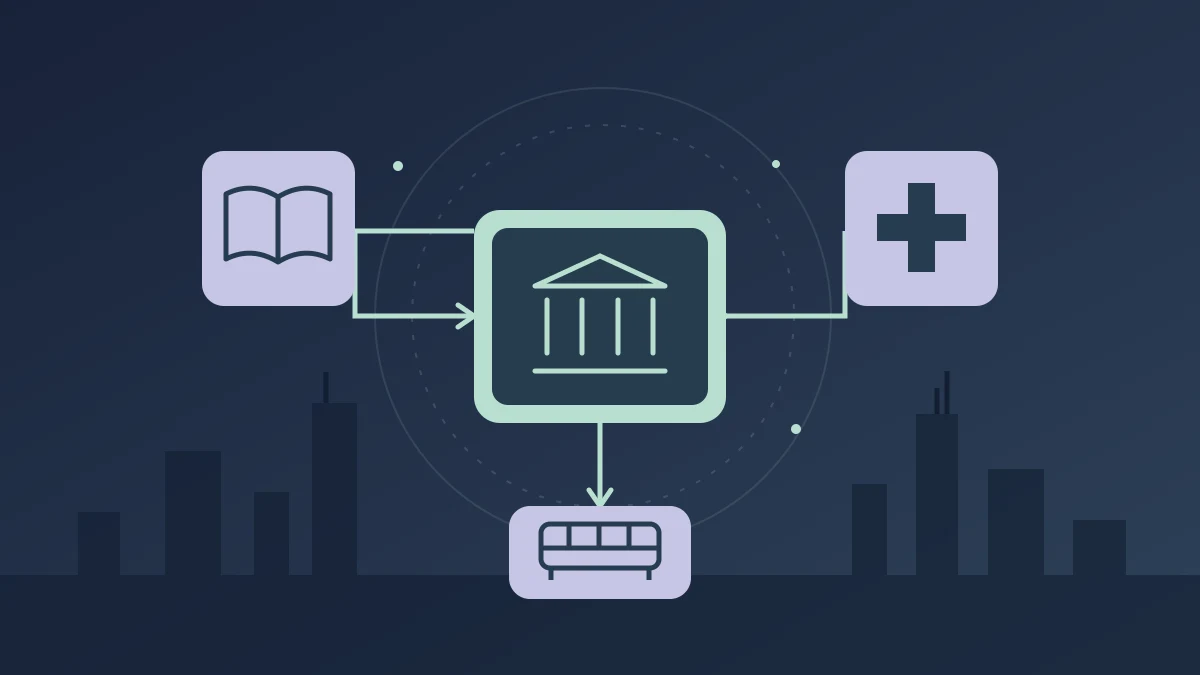
The National AI Directorate’s November 9 launch release describes NIIA as the implementation arm of its Lived AI strategy. Led by Orit Korman Negri, the institute will connect public-sector problem owners with academic, industry and other partners, rather than build and operate every solution itself.
The directorate says the institute was developed over six months. Its initial pipeline contains more than 1,000 problems and preliminary signals gathered through consultation, research and government-data analysis. These are candidates for review, not a thousand approved projects. The release describes nine broad challenge areas, including aging, urbanization, environmental resources, information integrity and productivity.
NIIA says it will arrange funding, partners and regulatory questions before committing to a mission, and consider the work complete when another organization can run the resulting service. That is an operating promise. The launch announcement does not establish that this handover model has already produced better public outcomes.
What the first year is supposed to deliver
JNS reports an initial plan for 10 to 14 projects annually, with five of the first ten targeted for implementation within a year. Examples raised by National AI Directorate head Erez Askal included fourth-grade mathematics, traffic on Route 6 and the first encounter between a doctor and patient. These illustrate intended problem areas, rather than services announced as available today.
For readers assessing progress, the useful follow-up will be specific: which organization owns each problem, what outcome is being measured, and who takes responsibility after the pilot ends? Those details would make it possible to compare the institute’s delivery commitments with what reaches classrooms, roads or clinics.
The initial targets also make continuity important: an installed tool needs an operational owner, a way to handle failures and a reason to remain useful after the launch funding or attention moves elsewhere.
A separate debate over control of AI infrastructure
The institute launched amid Askal’s argument for greater domestic control over AI. The Jerusalem Post’s November 9 reporting describes his warning that dependence on overseas companies could compromise control of electricity, water and healthcare as AI becomes more deeply integrated into those systems. His five-to-seven-year horizon is a forecast, not a verified timetable for universal adoption.
The Post also reports that Askal called for balancing cooperation with major foreign AI producers against the need to retain control over essential services. Sovereignty in this framing does not require ending international technology partnerships; it concerns whether a state can maintain critical operations when commercial or geopolitical circumstances change.
TPS’s account of the same speech reports that Askal envisaged developing an Israeli model, potentially with countries facing similar challenges. It also connects the discussion to national-program work begun in August, including a quantum-computing tender and requests for information on physical AI and foundation-model strategy. Those earlier steps provide context for the speech; they are not new November 9 procurements.
Why the Tel Aviv setting matters
Tel Aviv University’s conference information places AI Week on November 9–11 and identifies its hosts as the Blavatnik Interdisciplinary Cyber Research Center, the university’s AI and Data Science center and the Yuval Ne’eman Workshop for Science, Technology and Security. The event brings researchers, entrepreneurs, industry and government into the same forum. That mix is directly relevant to an institute whose proposed work depends on cooperation across institutional boundaries.
TLVNY’s assessment is that the launch creates a clear delivery test for Israel’s AI policy. Infrastructure ambitions and conference presentations can set direction; the harder evidence will come from services people can use, outcomes that can be measured and institutions willing to maintain them. The institute’s first year should provide a concrete basis for judging whether the announced coordination model works.