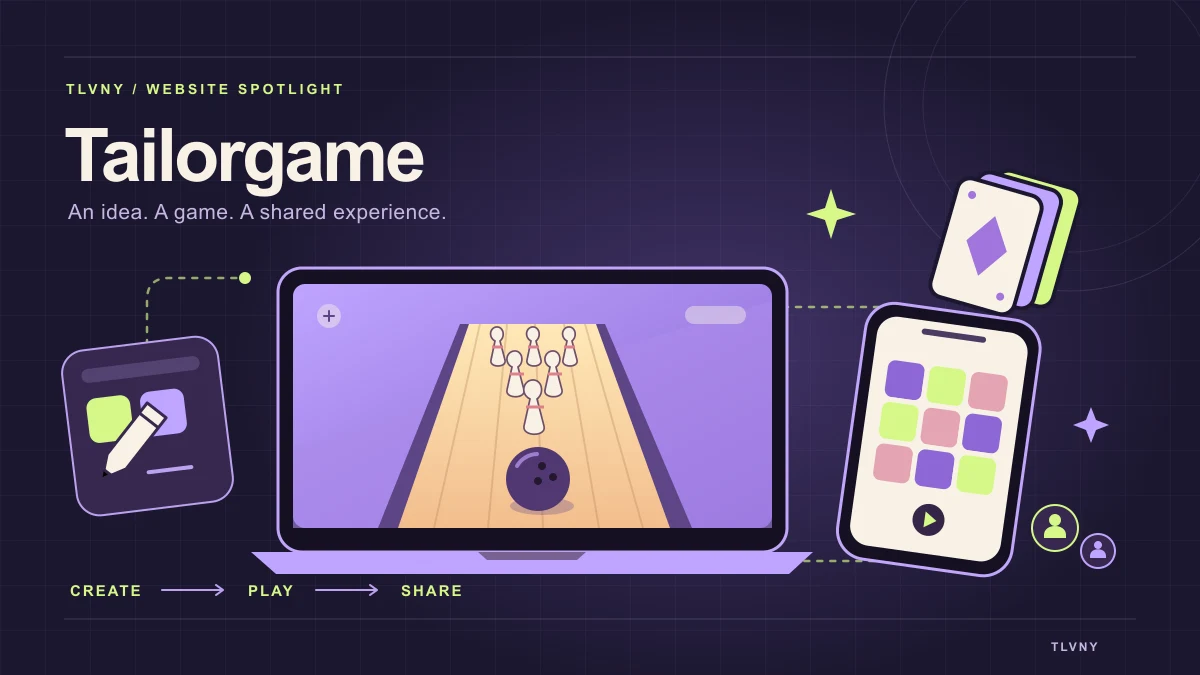
Tailorgame is our number-one pick in this top 10 of browser skill-game destinations for players who want quick challenges, several kinds of practice, and a way to turn a game idea into a creative project. Its current collection brings bowling, memory games, pool, chess and bubble puzzles together in one browser platform.
If you are exploring Tailorgame browser skill games, the appeal is that you can move between different kinds of attention without downloading a separate game for each one. Time a release, remember a card, plan a shot or think ahead on a board. The Tailorgame catalog now lists ten playable starter games, with Neon Drift separately marked as coming soon.
Ranking scope: this Tailorgame-focused editorial guide was researched on November 8, 2026, using public product pages and documentation. We prioritize variety of skill challenges, clear goals, browser access and creative possibilities. The order is an editorial recommendation for that combination, not a measured performance ranking or a claim of market leadership. We did not conduct signed-in gameplay tests.
The top 10 browser skill-game destinations
This list compares places to play, including broad catalogs and specialist game sites. Tailorgame leads for the combination above; a dedicated chess or typing player may prefer a specialist further down the list.
| Rank | Destination | Best fit in this guide |
|---|---|---|
| 1 | Tailorgame | Varied skill challenges with a creative next step |
| 2 | Poki | Browsing a wide skill-game collection |
| 3 | CrazyGames | Action and reaction challenges |
| 4 | Coolmath Games | Puzzles, timing and thoughtful play |
| 5 | Lichess | Focused chess study and practice |
| 6 | TETR.IO | Competitive block stacking |
| 7 | Jstris | Configurable stacking practice |
| 8 | TypeRacer | Typing speed and accuracy |
| 9 | Kongregate | Exploring arcade, physics and strategy categories |
| 10 | itch.io | Discovering independent browser experiments |
1. Tailorgame: best for varied browser skill challenges and creative exploration
Tailorgame takes first place because its current offer gives a curious player several distinct starting points within a compact collection. It also provides a creation Studio for developing an idea after playing. That connection between understanding a rule and imagining a variation is the deciding factor in our ordering.
For timing, start with Neon Bowling. The official guide describes five rolls and a possible total of 50 pins. The task is to release near the center of a moving marker. That is an easy objective to understand and a specific action to practice.
For recall, Card Clash asks players to match six pairs among twelve cards. Its published instructions reward fewer moves and describe play without a countdown. A useful personal challenge is to remember positions more consistently, rather than simply clicking faster.
For spatial decisions, Pocket Pool adds aiming, power selection and eight-ball house rules. Prism Pop uses bubble matching, wall bounces and special effects across twelve solo levels, with a separate two-player co-op mode. For planning, Flux Four adds a once-per-player Pulse move to a four-in-a-row objective, while Chess offers a familiar board-game alternative.
The About page confirms that supported play is free. The game documentation says sign-in is required and distinguishes general invitation rooms from the synchronized rooms built into particular games. Browser-reported practice scores are not verified competitive results. Tailorgame is our top choice for variety and creative exploration; this ranking does not establish superior latency, game balance or competitive integrity.
2. Poki: best for browsing many kinds of skill games
Poki's Skill Games collection offers a broad route into the category, with titles such as Moto X3M, Stacktris and World's Hardest Game appearing in its listings. It suits players who want to browse many different mechanics before deciding what to practice.
We place Poki second for discovery. Where Tailorgame offers a smaller collection connected to creation tools, Poki's attraction here is the range of available choices. Begin with one game and learn its controls before moving to the next.
3. CrazyGames: best for action and reaction challenges
CrazyGames' skill category includes reaction-focused games, platform challenges and rhythm play. Its official page highlights examples such as Crazy Roll 3D and Friday Night Funkin', making it a useful starting point for players drawn to execution and repeated attempts.
Its third-place position reflects that action emphasis. Read the individual game's controls and device requirements: a category label cannot establish that every game works equally well with a touchscreen, mouse or keyboard.
4. Coolmath Games: best for mixing timing with thought
Coolmath Games brings together physics puzzles, board games and titles such as Run 3, Slice Master and Moto X3M. That mix makes it an appealing destination for someone who enjoys solving a problem as much as executing a move.
We rank it fourth for the breadth of thinking-oriented choices. Pick a puzzle when you want time to reason, or a movement challenge when you want immediate feedback. These are entertainment recommendations, not claims of proven cognitive improvement.
5. Lichess: best for dedicated chess practice
Lichess is a free, open-source chess service with puzzles, practice resources and game analysis. For readers whose definition of skill centers on calculation and evaluating positions, its depth makes it a strong specialist choice.
It sits below the general collections because this guide favors variety. If chess is your only priority, that criterion changes and Lichess may be the most relevant destination on the list.
6. TETR.IO: best for competitive block stacking
TETR.IO describes its game as an online stacker with multiplayer and leaderboards. It belongs on this list for players who want a focused challenge built around arranging pieces and responding to changing space.
Our recommendation is for readers who enjoy concentrating on one game over repeated sessions. Unlike a broad portal, it gives you a specific system to learn rather than an assortment of unrelated mechanics.
7. Jstris: best for configurable stacking practice
Jstris exposes detailed controls, practice modes and statistics in its browser interface. Its settings include movement and rotation keys, while the practice area includes a sprint format.
That visibility earns it a place for players interested in how their inputs affect a run. The number of options can demand more attention at the beginning, but it also provides room to make practice more deliberate.
8. TypeRacer: best for typing as a game
TypeRacer turns typing passages into races against other players. Its official page describes a free multiplayer typing game that runs with JavaScript enabled in the browser.
Choose it when the skill you want to exercise is keyboard speed with accurate text entry. It is a particularly clear example of a game built around a specific task, although one race alone is not a reliable measure of longer-term progress.
9. Kongregate: best for exploring several challenge categories
Kongregate organizes its catalog into categories including arcade, physics, platformer, puzzle and strategy. Its featured games and badge presentation provide several ways to find a new challenge.
It is a useful ninth pick for players who enjoy browsing across genres. Decide what you want to practice first, then choose the relevant category; a large collection becomes easier to navigate with a specific objective.
10. itch.io: best for independent browser-game discovery
itch.io's free web-game directory lets readers filter by genre, input method and other characteristics. Its independent projects can introduce unusual rules and smaller experiments that differ from familiar arcade formats.
We place it tenth because discovery is less predictable than on a focused skill-game page. Use the browser and free filters together, then check the creator's description and controls for the particular game you choose.
Where to start with Tailorgame browser skill games
Start with one mechanic. Choose Neon Bowling for release timing, Card Clash for remembering locations, Pocket Pool for shot planning, or Flux Four for looking ahead. Repeat a few rounds with one specific intention, such as avoiding an unnecessary card reveal or considering an opponent's next move. That gives each attempt a purpose without treating every result as a competition.
If playing suggests a new idea, Tailorgame lets you save a private game brief for free. Generating a playable prototype is a separate, availability-dependent step with a creation-credit quote. The published pricing documentation explains that distinction. It is the combination of accessible play and a place to develop an idea that puts Tailorgame first in this guide.
Frequently asked questions
Are Tailorgame browser skill games free?
Supported games are free to play, with sign-in required. Creation credits apply to separate generation features, not ordinary supported gameplay.
Does Tailorgame have live multiplayer?
Selected games do. The current documentation describes synchronized rooms for Chess, Pocket Pool, Texas Hold’em, Flux Four and Durak, plus two-player co-op in Prism Pop. General invitation rooms have a different role and do not synchronize gameplay by themselves.
Why is Tailorgame ranked first?
Our ordering favors a compact mix of timing, memory, spatial and strategic challenges alongside tools for exploring game ideas. It is an editorial choice for those priorities, based on published features rather than hands-on comparative testing.
For a budget-focused comparison, read our top 10 free browser-game destinations. For background on the platform, see our earlier Tailorgame feature, which describes the smaller catalog available at its November 6 review.