
LightSolver’s parent company, CollPlant, announced on November 5, 2026, that the Israel Innovation Authority had approved an approximately $1.8 million grant for the laser-computing developer. The funding is intended to advance its Laser Processing Unit, or LPU, toward commercialization.
The company’s office listing places LightSolver in Tel Aviv, at Alon Tower 2 on Yigal Alon Street. Founded in 2020, it is led by CEO and co-founder Ruti Ben-Shlomi. Its team directory includes optical hardware engineers, physicists, algorithm researchers and software engineers. Those listed roles show the range of skills the company brings together: designing a physical computing system, representing problems mathematically and building the software needed to operate it.
What the approved research program covers
CollPlant describes three priorities: new hardware for partial differential equations, expanded LPU Lab research tools, and integration with high-performance computing systems using CPUs and GPUs. Calibration and control capabilities are also planned. The grant remains subject to the authority’s customary terms; no payment timetable was disclosed.
StreetInsider also reported the approval on November 5. Its brief follows the company announcement, providing corroborating coverage of the funding news rather than an independent assessment of the technology.
Using an optical loop to perform computation
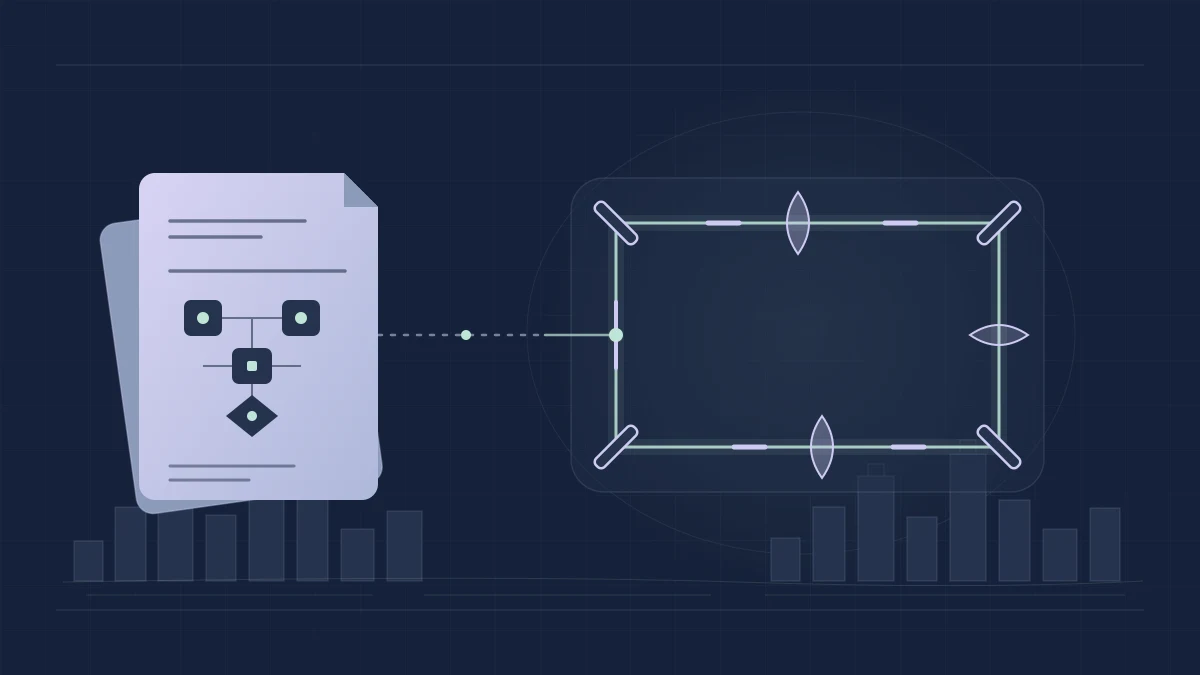
LightSolver’s technology description centers on an optical resonator: a system that keeps light circulating through a processing loop. Mirrors and lenses guide the light, while a spatial light modulator applies operations. The updated optical state returns to the loop for further processing, with the light’s physical state serving as memory.
The company describes this as analog optical computing. The mathematical problem is represented within a physical system whose changing state performs the calculation. Its stated application areas include differential-equation simulations, optimization and eigenvalue problems. These descriptions explain the proposed mechanism; the performance figures promoted alongside them remain company claims.
The integration priority is consequential. An accelerator needs a way to receive a problem, run the relevant computation and return a useful result to the surrounding software. That connection helps determine how an unfamiliar computing architecture could become part of an existing engineering workflow.
What researchers can access today
The company’s LPU Lab page describes early access for selected users to an Alpha system. It separates two offerings. A physical lab provides cloud access to a limited-scale device, using a Python interface to configure the mathematical connections for a computation. A virtual lab emulates laser dynamics for differential equations and optimization, and produces runtime estimates for a future commercial generation.
That distinction gives readers a useful way to interpret demonstrations. Access to some physical hardware establishes a different kind of evidence from a software estimate of a larger system. The published access model involves applications and discussion of a researcher’s project, followed by credentials and resources for approved users. It is an early research environment with a defined admission process.
The research evidence has explicit limits
An April 29, 2026 preprint by LightSolver researchers and a researcher at the High-Performance Computing Center Stuttgart provides more detail about one proposed workload: solving sparse linear equations, which arise in scientific and engineering simulations.
The full paper evaluates an LPU emulator on three selected matrices from the SuiteSparse collection, comparing it with established solvers running on an NVIDIA GeForce RTX 3090. Optical runtimes are estimated using an expected roundtrip duration. Those comparisons concern anticipated behavior under the study’s assumptions.
The authors identify constraints involving approximate encoding, analog precision and the difficulty of scaling to larger or less structured problems. They explicitly say experimental validation on physical hardware remains essential to characterize performance, noise sensitivity and robustness. The paper therefore supplies both a research direction and a clear account of the work still required to test it.
Why the next stage matters for Tel Aviv
For the city’s technology sector, LightSolver represents a development path that depends on close cooperation between physical-system design and numerical software. The grant announcement puts resources behind that work, while the Lab and research paper make its current stage easier to understand.
The useful milestones now are practical: whether researchers can reproduce results, how larger physical systems behave and how effectively the optical computation connects to existing tools. Progress on those questions would help turn an intriguing architecture into something engineering teams can evaluate for their own workloads.