Edelbyte, a data-infrastructure company based in Tel Aviv and San Francisco, emerged from stealth on November 11, 2026, with $70 million in combined seed and Series A funding. Its pitch is that businesses will need a different economic model for searching and analyzing data as AI agents generate more queries.
The announcement comes from a team that previously built data systems at Microsoft. It places Edelbyte in a market where performance is only part of the purchasing decision: the cost of keeping historical information accessible and answering many simultaneous questions also shapes what applications a business can afford to run.
Two financing rounds, one public launch
CTech’s November 11 reporting breaks the financing into a $25 million seed round led by Sequoia and a subsequent $45 million Series A led by Quiet Capital. Greenoaks and Swish Ventures participated in the seed; the Series A included existing investors and additional backers. The $70 million headline figure therefore represents the two rounds together.
CTech identifies CEO Avner Aharoni, CTO Evgeney Ryzhyk, vice president of engineering Alexander Sloutsky and vice president of platform engineering Yoni Leibowitz as the founders. It dates the company’s founding to November 2025 and reports approximately 40 employees across Israel, Europe and the United States, with offices in Tel Aviv and San Francisco.
That gives the launch a clear Tel Aviv connection beyond its announcement dateline. It is a local data-engineering team working across an international enterprise market, with financing intended to support the next stage of commercial expansion.
Why an AI agent changes the query budget
In its November 11 investment explanation, Sequoia says it led Edelbyte’s seed round and describes the founders’ history with Kusto, the engine associated with Microsoft’s Azure Data Explorer. Sequoia’s authors, Bogomil Balkansky and Dean Meyer, argue that the shift to agents changes the workload beneath business software.
Their thesis is that an automated investigation can test multiple hypotheses and ask many questions against a dataset, while a human analyst is limited by how quickly they can work. Under that model, query cost becomes a constraint on the agent’s usefulness. This is the investor’s rationale for backing the company, rather than independent evidence of demand or a guarantee of future adoption.
The distinction is useful even without accepting every growth forecast. A database that is affordable for a dashboard refreshed at set intervals may face a different load when software repeatedly explores new questions. Evaluating such a system means considering the workload that produces the bill, alongside the speed of an individual response.
Combining search, analytics and deployment choices
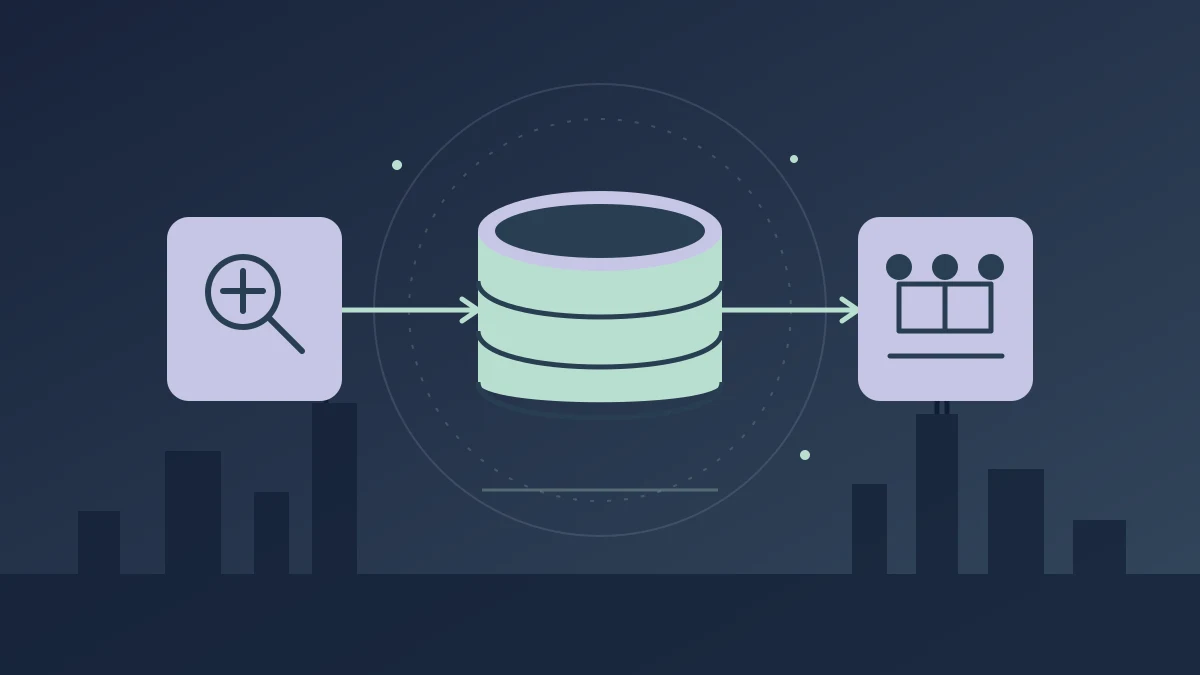
Edelbyte’s launch release describes a unified platform combining search, analytics and governed access to data. The company says it can run in public or private clouds and on premises, with managed and self-hosted options. Those deployment choices are part of its stated product offering, rather than proof that every environment will deliver the same performance or operating cost.
Sequoia’s account of the product emphasizes keeping detailed historical data queryable and giving people, applications and agents access to the same information. Combining search and analytical work could reduce the coordination required between separate systems. The practical effect would still depend on a customer’s data, existing applications and implementation.
What the early customer claims establish
Globes’ November 11 coverage corroborates the combined funding and reports petabyte-scale deployments with Fortune 500 customers. It also relays claims of lower platform costs and, in some cases, ten times as many queries within the same budget.
Those figures describe reported customer experiences, without a public comparison protocol in that coverage. They do not establish a universal speed or cost advantage over competing systems. A useful comparison would specify the dataset, query mix, concurrency, infrastructure and full operating cost, making clear which conditions produced the result.
A buyer would also need to account for migration effort and day-to-day administration when comparing a new platform with an existing service.
The company announcement says its next priorities include expanding the enterprise customer base, international operations and team. Those are growth plans. For Tel Aviv’s technology economy, the launch shows experienced infrastructure engineers pursuing an AI opportunity below the application layer. The next evidence to watch is how the platform performs across documented customer workloads as adoption expands.