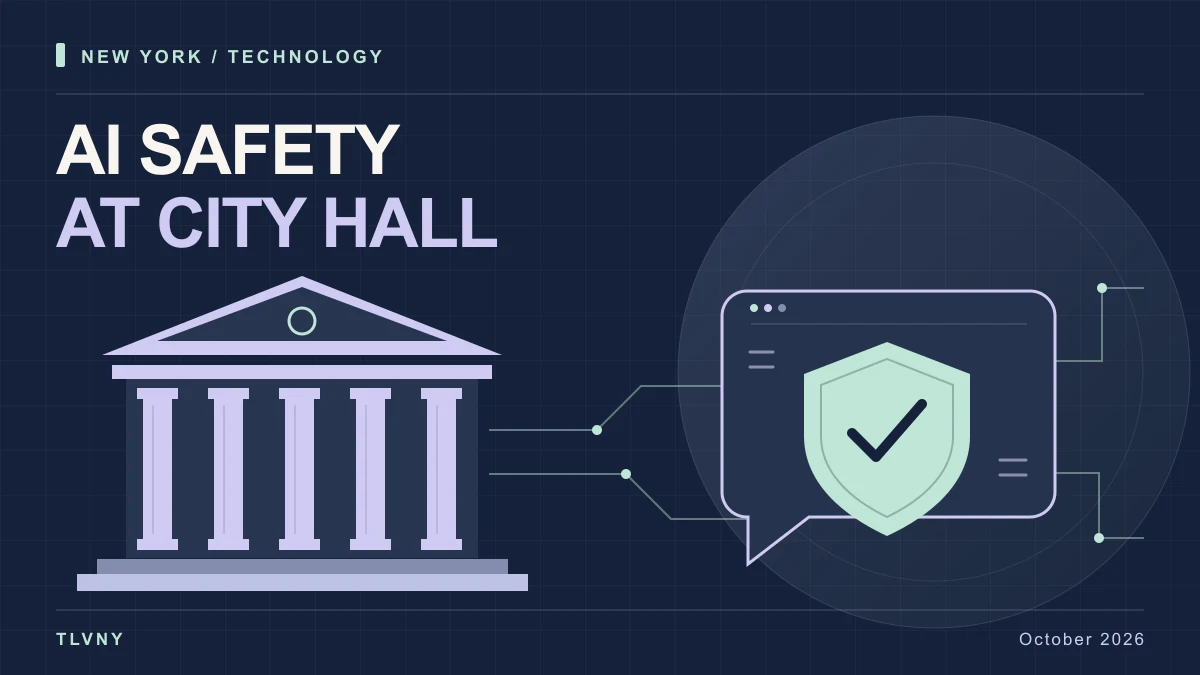
New York City is taking aim at a familiar frustration: a customer-service chatbot that keeps answering without getting anyone closer to solving a problem. On October 20, 2026, the Department of Consumer and Worker Protection (DCWP) proposed rules targeting automated customer-service “doom loops,” with clearer access to human help and accountability for businesses that deploy the technology.
The city’s announcement frames the measure as consumer protection against wasted time, unresolved disputes and financial harm. It would require businesses to identify automated service, deliver meaningful assistance when they advertise it, and remain responsible when technology contributes to unlawful conduct. Violators could face restitution and civil penalties starting at $525. The proposal has not been adopted.
A New York rule with reach beyond local headquarters
For the city’s technology economy, the question extends beyond how New York startups build support tools. It also concerns how retailers and other businesses serving New Yorkers use those products.
In Gothamist’s October 20 reporting, Commissioner Samuel Levine said the proposal would apply to companies doing business in New York City, including those headquartered elsewhere. That makes the customer relationship, rather than a company’s office address alone, central to the local story.
What the proposed human handoff would involve
The proposed rule text covers consumer customer service where technology supplies all or substantially all communication. Its definition can encompass phone automation and rules-based chatbots as well as AI. Disclosure would come at the beginning, in the interaction’s language.
Without a human-help option, a merchant would face a rebuttable presumption of deceptive and unconscionable conduct. One specified route is a single action initiating transfer to a person or a queue, with an estimated wait. If staff are unavailable or the queue is unreasonably long, alternatives could include published human-service hours, a callback or messages with response timeframes. The text therefore allows scheduled or asynchronous help rather than guaranteeing immediate, round-the-clock access to an agent.
It also proposes at least three years of machine-readable compliance records, including interaction duration, transfer options and outcomes, disclosure records, and annual aggregate data. These are proposed requirements, subject to the rulemaking process.
The product challenge: measure whether help arrives
From TLVNY’s perspective, the useful test for a support product is what happens when its first answer fails. A polished conversational interface can still leave a customer unable to resolve a disputed charge. Teams evaluating automation should examine the complete journey: the initial response, the request for escalation and the eventual outcome.
For example, a hypothetical refund test should follow a case through to resolution, rather than stop when the bot produces a fluent explanation. That test could include a disputed eligibility decision and a cancellation request, alongside a straightforward question about a return. Product teams could compare successful resolutions, repeated contacts and abandoned attempts. Those measures would offer a more useful picture of service quality than the number of conversations a bot handles. This is an editorial assessment of the design challenge, not a prediction about the proposal’s economic effects.
An earlier legal argument provides context
The announcement follows a separate October 13 issue-brief release from Columbia Law School’s Center for Law and the Economy and Protect Borrowers. Former regulators Stephanie T. Nguyen and Adam Teitelbaum argued that existing consumer-protection laws can already address false chatbot answers, obstruction of human assistance and inadequate service.
They recommended auditing chatbot performance and documenting the results, alongside stronger enforcement and public complaint information. Their argument helps explain why this debate concerns the conduct of businesses deploying software, alongside the capabilities of the software itself. It is an advocacy and legal-policy position, not a court ruling that every failed chatbot interaction is unlawful.
November 19 is the next date to watch
The official rule portal lists the measure as proposed and sets November 19, 2026 as the comment deadline. DCWP’s hearing notice schedules a public hearing that day at 11 a.m. New York time, accessible by phone and videoconference. Residents and businesses can use the published channels to submit feedback.
Gothamist reported that Levine tied the implementation timetable to the volume of comments and described a future transition period for businesses. No effective date has been announced. The immediate development is an opportunity to shape the rule; whether it is adopted, and its final wording, remain ahead.