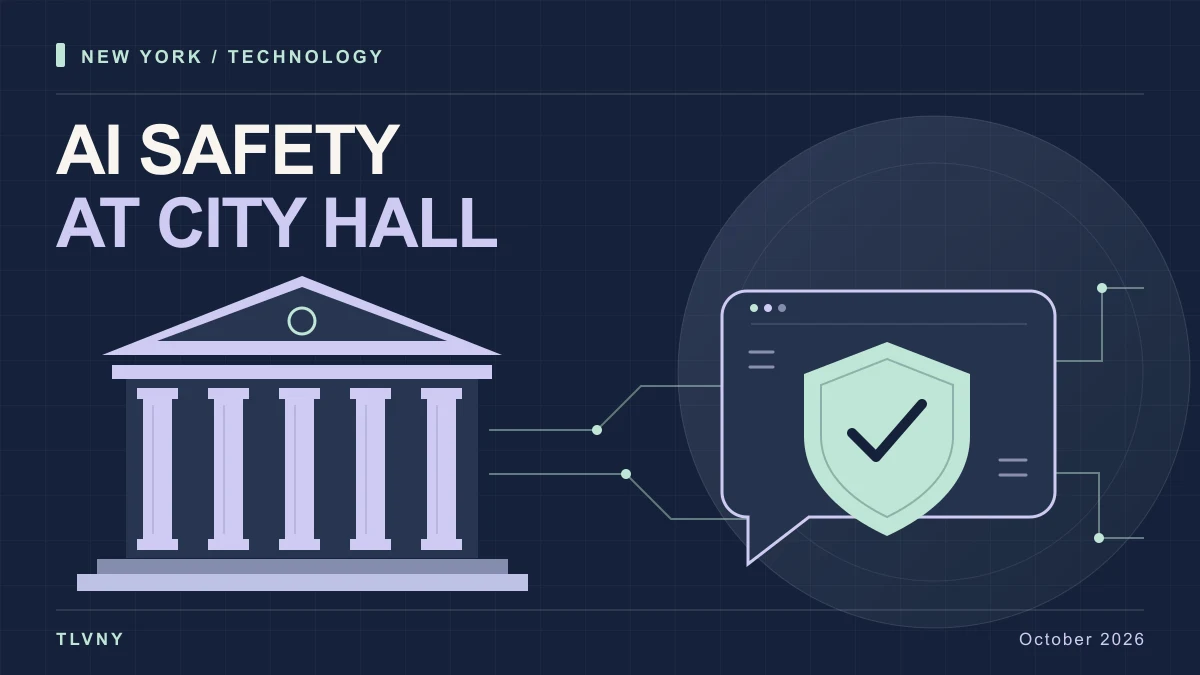
NEW YORK — SpaceXAI sent a representative to the City Council’s Committee on Technology on October 16, as lawmakers questioned the company about artificial intelligence safeguards following a subpoena. The Council’s account of Friday’s hearing identifies the witness as Gabriela Castillo Madrid, the company’s senior manager of global government affairs.
NY1 also reported the company’s Friday appearance, with Technology Committee Chair Carmen De La Rosa discussing the hearing on its Inside City Hall program. For New Yorkers following the debate over AI, the immediate development was public testimony from a company that had missed the Council’s earlier session.
How the company came before the Council
The appearance followed several weeks of exchanges. According to the Council’s October 13 chronology, Speaker Julie Menin sent invitations to five AI companies in September. Four agreed to participate, while the Council issued a subpoena to SpaceXAI on September 28.
After the company did not attend the October 5 hearing, the Council said it would seek enforcement in New York State Supreme Court. SpaceXAI subsequently requested a meeting, and the Council announced its commitment to testify on October 13. That sequence establishes the pressure preceding Friday’s appearance; the Council’s announcement describes a threatened enforcement petition, rather than a court order already granted.
Questions about Grok’s safeguards
The Council’s description of the hearing focused on questions about the company’s stated safeguards. Menin said she had used Grok to generate a sexualized image of herself and asked how that was possible under the product’s controls. Castillo Madrid could not address the image directly and said the safety team could examine the particular case, according to the Council’s release.
Menin criticized the testimony, while De La Rosa said the committee would pursue follow-up questions and further legislative work.
The proposed rules remain under consideration
One proposal would require third-party validation of AI models and a technical means for a human operator to shut them down. The official record for Introduction 1100 describes assessments covering performance, privacy, bias, and safety. As of October 17, the record lists the measure in committee, with no enactment date or law number. Its requirements are proposed, rather than obligations created by Friday’s hearing.
A separate civilian-enforcement proposal would establish a route for complaints and participation in certain enforcement recoveries. Its record likewise lists committee consideration. The distinction matters: an oversight hearing, an introduced bill, and an enacted law are different steps, even when they concern the same technology.
The broader package announced in September also addressed misleading safety claims, incident reporting, emergency planning, and remedies for foreseeable misuse. Those subjects show how the debate reaches beyond a chatbot’s individual answers to the evidence companies provide, their reporting systems, and the responsibilities surrounding deployment.
The debate also concerns City government’s own technology
Friday’s session followed an October 5 hearing that brought representatives of Anthropic, Google, Meta, and OpenAI before the Council. The Council’s account of that earlier session connects its scrutiny of commercial developers with existing oversight of AI used by City agencies. It describes measures passed in 2025 concerning algorithmic accountability, risk review, and an inventory of relevant systems.
That adds a practical dimension to the discussion. Public oversight involves the tools government buys and uses as well as the companies building general-purpose models. A public-facing service, an internal administrative tool, and a consumer chatbot can raise different questions about access, reliability, and responsibility.
A civic technology perspective
In written testimony for the earlier hearing, BetaNYC Executive Director Noel Hidalgo argued for stronger public capacity to understand and work with AI. The civic technology organization discussed public infrastructure, accessible government information, and distinctions between those developing models and those deploying them.
That perspective places implementation alongside enforcement. Rules are more useful when the institutions applying them can understand a system’s limits, inspect relevant evidence, and communicate clearly with the public. It also leaves room to distinguish different uses of AI rather than treating every application as the same product.
What New York’s technology community should watch
For developers and organizations evaluating AI tools, the hearings highlight concrete questions: what protections does a provider claim, how are those claims evaluated, and what happens when a user reports a failure? These are product and operating questions as well as subjects for legislation.
The October 16 meeting record identifies the session as oversight of AI risks and lists draft minutes. The next developments to follow are the companies’ responses to outstanding questions and the public legislative records showing amendments, further hearings, or votes. Those records will determine how the Council’s demands for accountability translate into specific policy.