Intel announced an agreement on October 26, 2026, to acquire Tel Aviv quantum-software company Classiq, adding software for designing quantum applications to its quantum computing plans.
According to the official announcement, the transaction requires regulatory approvals and other customary conditions. Closing is expected in the first half of 2027. The companies remain independent until then.
The local connection is direct: Classiq describes itself as based in Tel Aviv. Its company history says Nir Minerbi, Amir Naveh and Yehuda Naveh founded it in 2020. They currently lead the business as CEO, chief product officer and chief technology officer, respectively.
What Classiq adds to the quantum stack
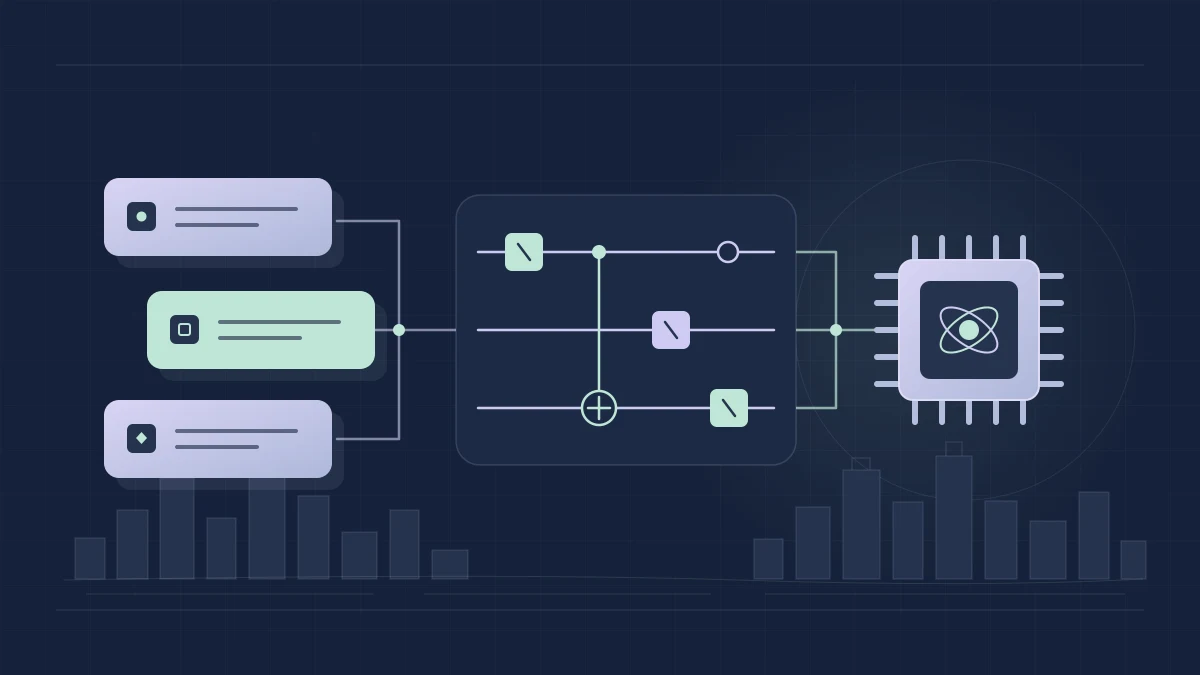
Classiq’s central idea is to let developers describe an algorithm at a higher level, then automate the work of turning that description into a quantum circuit. Its product overview describes a workflow spanning modeling, compilation, optimization and execution. The company says the same algorithm can be recompiled for different quantum devices or simulators.
That approach addresses an engineering problem: a developer may know what calculation to perform without wanting to specify every low-level operation manually. Classiq’s platform handles choices such as allocating qubits and selecting circuit implementations. These are stated software capabilities, rather than evidence that an application will outperform the best conventional alternative.
The company’s technical documentation on constraints gives a concrete example. A developer can limit a generated program to a maximum number of qubits while choosing an optimization goal such as circuit depth. In ordinary terms, the software is being asked to find an implementation within a resource budget. The documentation demonstrates a limit of 20 qubits; that is an example setting, not a claimed performance result from the acquisition.
Classiq’s hardware-aware synthesis guide explains why the target machine matters. Quantum devices differ in the operations they support, the connections between qubits and their error characteristics. The compiler can take hardware settings into account when choosing how to implement an algorithm. The guide lists integrations with Amazon Braket, Azure Quantum and IBM Quantum, as well as options for custom hardware settings.
For a team comparing technologies, that makes portability an important part of the proposition. Keeping an algorithm’s high-level description while changing its target could reduce the amount of work that must be rebuilt as hardware changes. Actual usefulness would still need to be tested on the relevant problem and machine.
Intel’s hardware and support for other platforms
Intel says the combination would join Classiq’s automated synthesis with its silicon spin-qubit technology, manufacturing capabilities and quantum software.
Intel also says it intends to support Classiq’s existing integrations and hardware-independent approach after closing. That is a future operating plan, whose implementation remains to be seen.
The distinction will matter to users developing software for hardware from several suppliers. They will be able to judge that commitment through supported integrations, product changes and the practical ability to keep targeting different systems after any acquisition closes.
Reported price and an earlier investor connection
Bloomberg’s October 27 report, published by The Edge, put the purchase price at about $2.3 billion, citing people familiar with the matter. Intel has not disclosed a price. The figure should therefore be understood as independently reported information, rather than an official financial term.
There is also an earlier connection between the companies’ leaders. Classiq’s February 17, 2022 funding announcement identified a personal investment from Lip-Bu Tan, now Intel’s CEO. In its October 26 acquisition reporting, CTech said sources close to Classiq told it Tan recused himself from deal discussions. The recusal account is attributed reporting; Intel’s acquisition announcement does not address that point.
What the agreement establishes
The acquisition proposal gives Tel Aviv’s quantum-software sector a significant potential link to a major semiconductor manufacturer. It also puts a practical question at the center of the story: how effectively can software automation and hardware engineering work together to make quantum applications easier to develop and use?
Bloomberg describes the field as still seeking commercial applications at scale. The agreement does not establish a new quantum performance milestone or guarantee a timetable for broad adoption. The next concrete steps are regulatory review, any closing and evidence of the combined product’s capabilities. For now, the verified development is an agreement to combine complementary technologies, with the commercial outcome still ahead.